





view cart  my account  pest control help  
   
  Pick a pest:
Ants
Bed Bugs
Birds
Boxelder Bugs
Carpenter Bees
Carpet Beetles
Centipedes
Clothes Moths
Crickets
Drain Flies
Earwigs
Fire Ants
Fleas
Flies
Fruit Flies
Ground Hogs
Grubs
Lady Bugs
Millipedes
Moles
Mosquitoes
Opossums
Pantry Beetles
Pantry Moths
Pantry Pests
Powderpost Beetles
Raccoons
Rats & Mice
Roaches
Scorpions
Silverfish
Skunks
Snails and Slugs
Snakes
Spiders
Springtails
Squirrels
Stink Bugs
Termites
Wasps & Hornets
Yellow Jackets

Tools and Sprayers
General Pest Control
Natural & Organic
Odor Control
Lawn & Garden
Herbicides and Generic Roundup
Maxforce Products
Talstar Products
Diazinon
Do It Yourself Pest Control
Pest Control
Active Ingredients
All Products
Kits


Orders, Shipping & Returns
Privacy & Security
Disclaimer
Contact Us
All products
Site Map
Articles
Newsletter
Home » Articles » Pest Identification & Biology » Box Elder bugs Identification & Biology

Box Elder bugs Identification & Biology

By DoMyOwnPestControl.com staff


Email article Print article


Physical Appearance

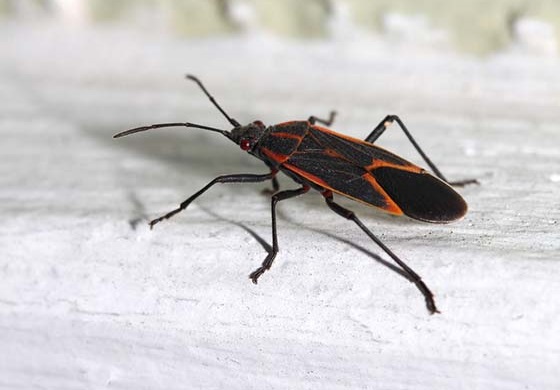
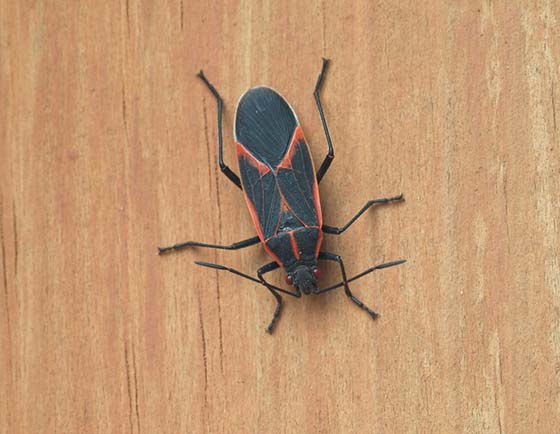
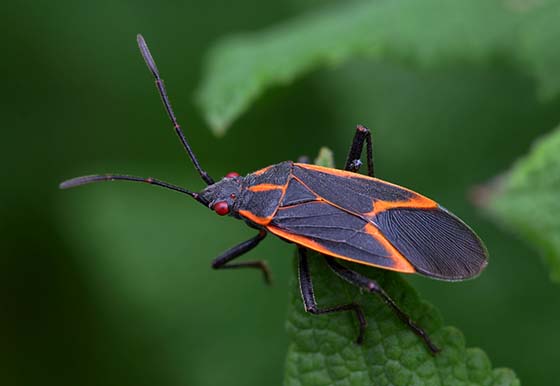
  • Box Elder bugs are about 1/2 inch long and 1/3 as wide.
  • Boxelder bugs are black with three red lines on the thorax, a red line along each side, and another on each wing.
  • The wings of a Boxelder bug lie flat on the back when at rest.
  • Young Box elder bugs, or nymphs, are gray and red.


Habitat

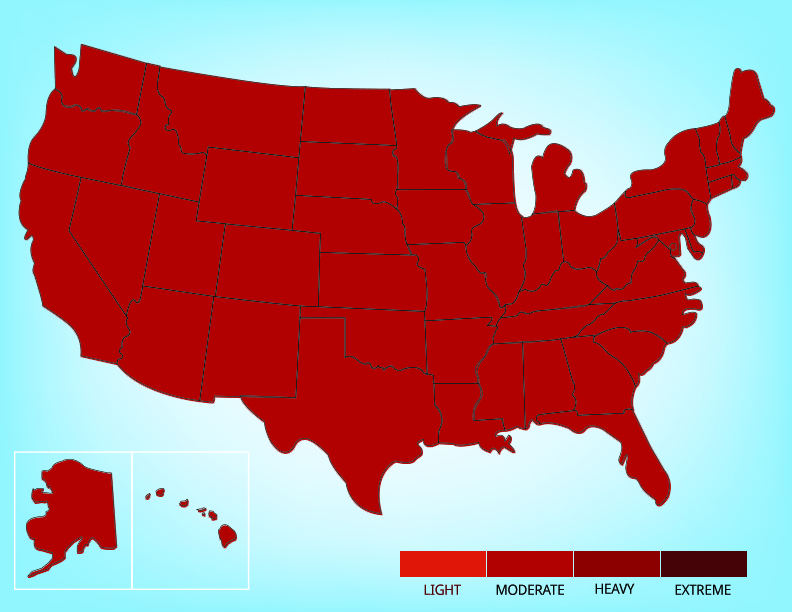
Boxelder bugs are most likely to be found feeding on the leaves and flowers of the female boxelder and maple trees, but may also be found on other fruit and nut trees and plants. Box Elder bugs become a problem to homeowners during the winter when they migrate indoors searching for a warm place to spend the winter. Large numbers of Boxelder bugs may hide in small cracks and crevices in walls, door and window casings, attics, and around the foundation.


Life Cycle

Adult Boxelder bugs which have spent the winter indoors will lay eggs in the spring, with nymphs emerging in just a few days. These nymphs then develop into adults by mid-summer, and mate and lay eggs of the second generation. Activity of the second generation of Boxelder bugs is noticed in early fall when they gather on the trunks of boxelder trees in large numbers. This second generation continues the cycle of "overwintering" (hibernating, so to speak) and will lay eggs again in the spring.


Damage

Boxelder bugs cause little damage to most trees. Those feeding on fruit trees can cause damage and distortion to developing fruit. Indoors, Boxelder bugs are also relatively harmless except for tough-to-remove excrement spots they sometimes leave on draperies when they get inside during the fall and winter. They will not eat anything in your home including plants, do not reproduce indoors, are not poisonous if accidentally eaten, and are not carriers of any diseases. Once they get inside, the best tool you have on your side is the vacuum cleaner. Just suck ‘em right up!


Prevention

For more detailed information on Box Elder prevention and control, see How To Get Rid of Boxelder bugs.


View Box Elder Bug Control Products


Customers who read this article also bought:


We only sell the most effective products available-- the same products pest control companies use.

Can't find the product you are looking for?  E-mail us and we'll get it for you!


0 items


Disclaimer | Shipping & Returns | Privacy Notice


*NOTE: Free Ground Shipping is only for orders to the lower 48 United States.
Best Price Guarantee: We strive to keep the lowest possible prices on the Internet.
If you find otherwise (price must include tax and shipping) then email us. We'll match
or beat the price. We'll do what it takes to earn your business!

Do My Own Pest Control
5730 Oakbrook Pkwy, STE 130 Norcross, GA 30093
Call Toll Free: 1-866-581-PEST (M-F 9am-5pm EST)

All trademarks and logos are property of their respective owners.
©2004-2009 DoMyOwnPestControl.com. All Rights Reserved.