



Overview
Two Proven Methods for Getting Rid of Fire Ants

There are two proven methods for eliminating fire ant colonies: baiting and mound drenches. There are pros and cons for each method and you should choose the method you feel most suits your situation.
Baiting
Pros:- Baits work best when they are broadcast over infested areas using a hand spreader
- Can take about 3 weeks to see complete results
- Fire ants must be actively foraging for baits to be effective
- Rain or heavy dew can degrade most baits rendering them ineffective
Mound Drenches
Pros:- Mound drenches tend to offer fire ant elimination within 1 - 24 hours
- You must come in close contact with fire ant mounds which can increase your risk of being attacked
- Each mound must be treated individually
Method
1
Baiting
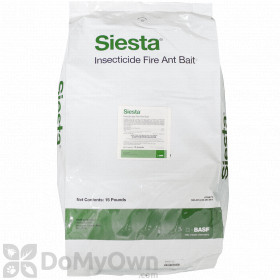
There are many fire ants baits on the market. Some have only one active ingredient impregnated on the bait, normally an insecticide or an insect growth regulator. These baits work well when you have a small to medium infestation. Other fire ant baits contain both an insecticide and an insect growth regulator and these are recommended when you have a medium to large infestation.
*An insect growth regulator acts as a birth control for the fire ant colony. The addition of an insect growth regulator will help stop the reproduction cycle while the colony is being eliminated.
Most fire ant bait products give you two treatment options for outdoors: baiting individual mounds, or broadcast spreading the baits. It is more effective to broadcast the bait over infested areas. There may be situations where broadcasting baits is not possible such as having bodies of water or edible gardens too close to the mounds and in these cases mound baiting would be most suitable.
For best results, only apply fire ant baits to dry ground and when there is no watering planned or rain expected for 48 hours. On extremely hot days, wait until later in the evening when it is cool and the ants are foraging.Broadcast Bait Application:
Apply granular fire ant bait to the infested area as directed on the product label. Once the bait is applied, colonies should be left undisturbed for several days to allow foragers adequate opportunity to bring the bait to the nest and spread it among worker and queen ants.Mound Baiting:
Apply the selected fire ant bait around the mound, being careful to not apply directly onto the mound, using the amount recommended on the product label. Once the bait is applied, colonies should be left undisturbed for several days to allow foragers adequate opportunity to bring the bait to the nest and spread it among worker and queen ants.Pro Tip
We do recommend that you do a quick test prior to baiting to make sure ants are actively foraging so you do not waste the bait. Drop a few potato chips near a fire ant mound. (Do NOT disturb the mound or drop the chips on the mound). After two hours, check the chips for ant activity. If the ants are foraging on the chips they will also eat the bait.
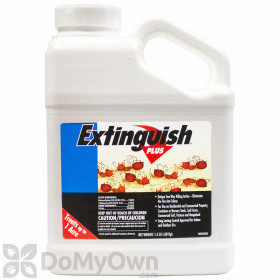
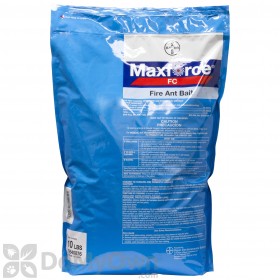
Products needed for Method 1

Method
2
Fire Ant Mound Drench
How to Get Rid of Fire Ant Mounds
Fire ant mound drenching is a great option when you need to quickly eliminate individual colonies that might have moved into areas where they pose a danger to people or animals. The Drenching method for Fire Ant mounds can be done with liquids or granules that are labeled for fire ant mound treatment. It is important to work quickly when using the liquid or granular drenching methods to avoid being bitten or stung.
Liquid Mound Drench Application
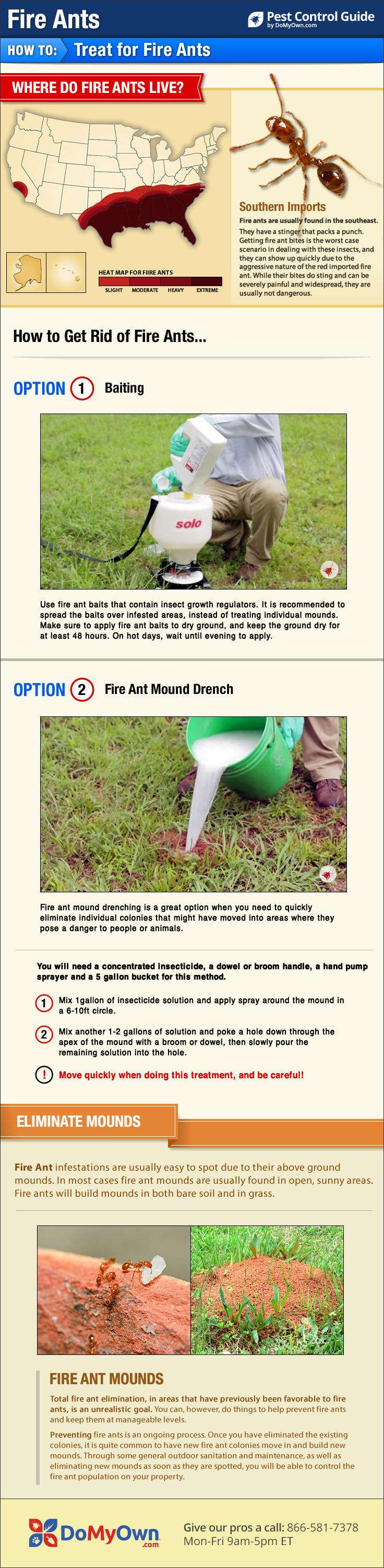
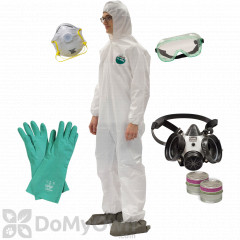
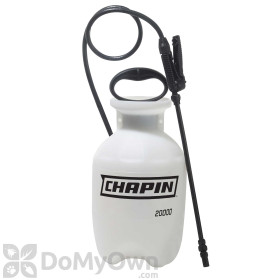
For this method you will need a concentrated insecticide labeled for fire ant mound drenching, a dowel or broom handle, a hand pump sprayer and a 5-gallon bucket for this method. Be sure you read the product label of the product you are using and observe the usage rates and the personal protection equipment that is recommended.
- Mix 1 gallon of insecticide solution according to the product label in the hand pump sprayer.
- Apply spray around the mound in a 6-10 ft circle to control foragers. Allow application to dry before moving onto next step.
- Mix 1-2 gallons of insecticide solution according to the product label in the 5-gallon bucket.
- Moving quickly, use dowel or broom handle to poke a hole down through the apex of the mound.
- Pour solution slowly from bucket into hole in the mound. Be careful not to use too much solution or pour too quickly as this could cause the product to runoff to other areas. Move away from the treated area as soon as possible.
Granular Mound Drench Application
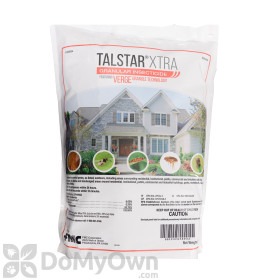
For the granular mound drenching application, you will need a granular insecticide labeled for fire ant mound drenching, and a 5-gallon bucket.
- Apply the recommended amount of granular insecticide three feet out around the mound.
- Apply the granules over top of the mound according to the product label.
- Pour the recommended amount of water on and around the mound to soak in the granules (Fire Ant mounds should be treated with enough force to break their apex and allow the insecticide solution to flow into the ant tunnels).
- For best results, apply in cooler weather (between 65-80 degrees F), or in early morning or late evening hours.
Products needed for Method 2
Fire Ant Treatment Infographic
(Click to View Full Graphic)