


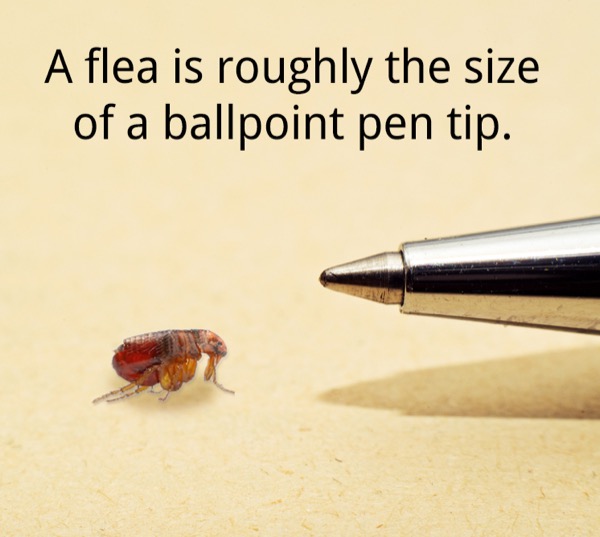
Physical Appearance
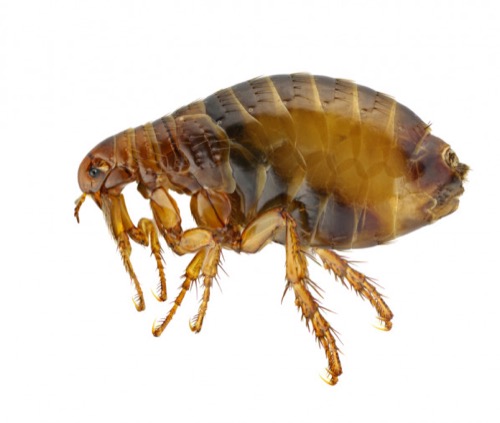
Fleas are reddish-brown to black in color, and very difficult to see with the eye at only 1/16" to 1/8". Their bodies are flattened laterally (from side to side), appearing "hard and polished". Fleas are wingless, with tube-like mouthparts. Fleas also have long legs for jumping, and are able to jump up to 7 inches vertically.
Behavior & Habitat
The preferred "habitat" of the flea is the sleeping or resting grounds of its host. Fleas are often found in pet and human bedding, carpets, and furniture. Fleas will also breed in large numbers where other pets and animals live.
Feeding Habits
Fleas are parasites which feed off the blood of mammals (including dogs, cats, and humans) and birds by attaching their tube-like mouth parts to the skin of the host animal. Fleas are able to survive two months to a year between meals.
Life Cycle
The female flea must feed on blood before it is able to reproduce. The flea life cycle begins when the female lays batches of up to 20 eggs after feeding. Eggs are deposited on the host itself, and then rolls to the ground, so that areas where the host sleeps (such as dog or cat beds) becoming the primary home of developing fleas. It takes only 2 days to 2 weeks for the flea eggs to hatch. Female fleas can lay 500 eggs or more in a lifetime.
Damage
Flea bites may have any of a wide range of side-effects on the host, including: an itching sensation, an allergic reaction resulting in rash, hair loss from constant scratching, and anemia. Fleas may also transmit diseases. A flea bite looks a lot like a mosquito bite-a slightly raised swollen bump with a single puncture point in the center.
General Prevention & Control:
Effective flea treatment must include both treatment of the pet, and treatment of the infested premises. If you treat your pet only, the pet will quickly be infected again when it returns to the infested premises.
Recommended Flea Control Products:
View all Flea Control Products
Related Articles How to Get Rid of Fleas Outdoor Flea Control Indoor Flea Control When a Flea Infestation Won't Quit
|