


|
Voles are intriguing small mammals because some populations regularly go through cycles from low to high numbers with occasional irruptions that can send numbers soaring (up to several thousand per acre).
IDENTIFICATION
Voles are mouselike rodents somewhat similar in appearance to pocket gophers. They have a compact, heavy body, short legs, short-furred tail, small eyes, and partially hidden ears. The long, coarse fur is blackish brown to grayish brown. When fully grown they can measure 5 to 8 inches long, including the tail.
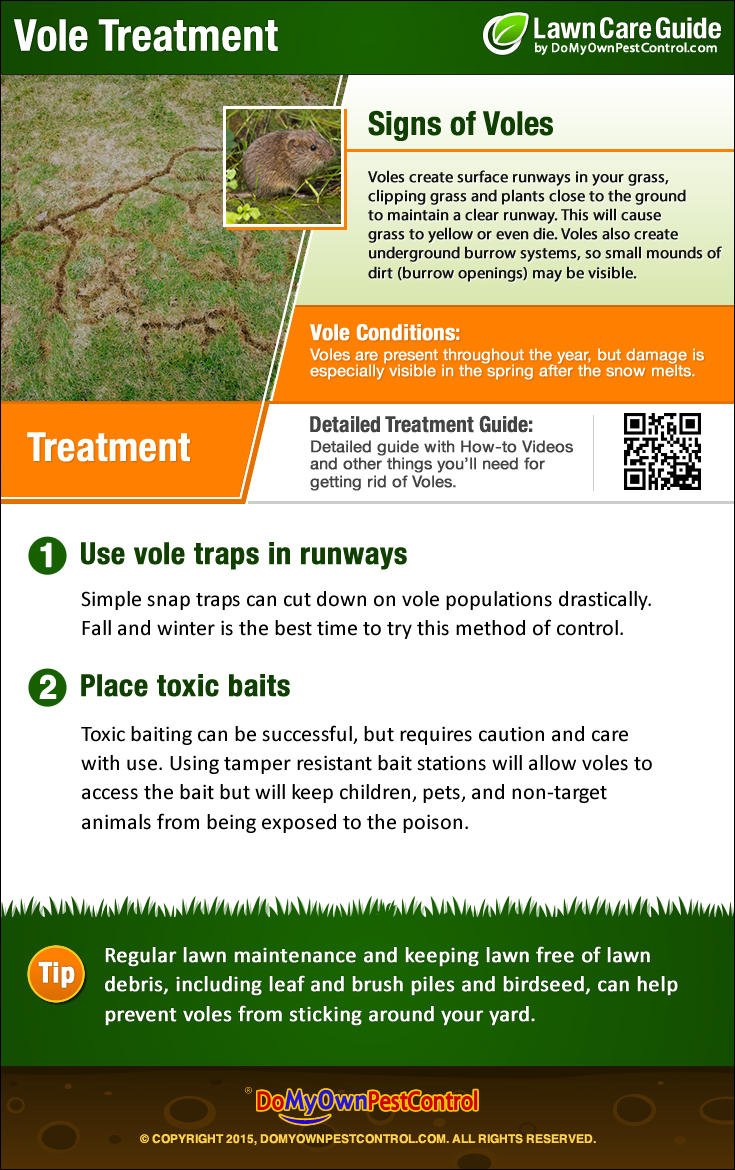
Although voles do spend considerable time aboveground and may occasionally be seen scurrying about, most of their time is spent below ground in their burrow system. The clearest signs of their presence are the well-traveled, aboveground runways that connect burrow openings; the runways are usually hidden beneath a protective layer of grass or other ground cover. The maze of runways leads to multiple burrow openings that are each about 1-1/2 to 2 inches in diameter. The runways are easily found by pulling back overhanging ground cover. Fresh clippings of green grass and greenish-colored droppings about 3/16 inch long in the runways and near the burrows are further evidence of voles. With age, the droppings lose the green coloring and turn brown or gray.
BIOLOGY AND BEHAVIOR
Voles are active day and night, year-round. They are normally found in areas with dense vegetation. Voles dig many short, shallow burrows and make underground nests of grass, stems, and leaves. In areas with winter snow, voles will burrow in and through the snow to the surface.
Several adults and young may occupy a burrow system. Home-range size varies with habitat quality, food supply, and population levels, but in most cases it is no more than a few hundred square feet.
Vole numbers fluctuate from year to year; under favorable conditions their populations can increase rapidly. In some areas their numbers are cyclical, reaching peak numbers every 3 to 6 years before dropping back to low levels. Voles may breed any time of year, but the peak breeding period is spring. Voles are extremely prolific with females maturing in 35 to 40 days and having five to ten litters per year. Litter size ranges from three to six. However, voles seldom live past 12 months of age.
Voles are mostly herbivorous, feeding on a variety of grasses, herbaceous plants, bulbs, and tubers. They eat bark and roots of trees, usually in fall or winter. Voles store seeds and other plant matter in underground chambers.
Voles are poor climbers and do not usually enter homes or other buildings. Instead, they inhabit wildlands or croplands adjacent to buildings, or gardens and landscaped sites with protective ground cover. Most problems around homes and gardens occur during outbreaks of vole populations.
DAMAGE
Voles cause damage by feeding on a wide range of garden plants including artichoke, beet, Brussels sprouts, cabbage, carrot, cauliflower, celery, lettuce, turnip, sweet potato, spinach, and tomato. Turf and other landscape plantings such as lilies and dichondra may be damaged. Voles will gnaw the bark of fruit trees including almond, apple, avocado, cherry, citrus, and olive. Vole damage to tree trunks normally occurs from a few inches aboveground to a few inches below ground. If the damage is below ground, you will need to remove soil from the base of the tree to see it. Although voles are poor climbers, if they can climb on to low-hanging branches they may cause damage higher up on trees as well.
Gnaw marks about 1/8 inch wide and 3/8 inch long found in irregular patches and at various angles, taken in conjunction with other signs (droppings, runways, and burrows), indicate vole damage. If voles gnaw completely around the trunk or roots, the tree's flow of nutrients and water will be disrupted; this is called girdling. Girdling damage on trunks and roots can kill trees. Signs of partial trunk or root girdling may include a prolonged time before young trees bear fruit, reduced fruit yield, abnormal yellowish leaf color, and overall poor vigor. Where snow cover is present, damage to trees may extend a foot or more up the trunk. Damage that occurs under snow cover often escapes notice until it is too late.
LEGAL STATUS
Voles are classified as nongame mammals by the California Fish and Game Code. Nongame mammals injuring or threatening growing crops or other property may be controlled at any time and in any legal manner by the owner or tenant of the premises.
MANAGEMENT
To prevent vole damage, you need to manage the population in an area before it reaches high numbers. This can often be achieved by removing or reducing the vegetative cover, thus making the area unsuitable to voles. Removing cover also makes detecting voles and other rodents easier. It is important to act before vole numbers increase rapidly because the damage these animals do to ornamental and garden plants and trees can be quite severe.
Monitoring Guidelines
Be alert for the presence of voles. Look for fresh trails in the grass, burrows, droppings, and evidence of feeding in the garden and surrounding area. Pay particular attention to adjacent areas that have heavy vegetation because such areas are likely sources of invasions.
Habitat Modification
One way to effectively deter vole populations is to make the habitat less suitable to them. Weeds, heavy mulch, and dense vegetative cover encourage voles by providing food and protection from predators and environmental stresses. If you remove this protection, their numbers will decline.
You can reduce the base area from which voles can invade gardens or landscaped areas by regularly mowing, spraying with herbicides, grazing, or tilling grassy areas along ditch banks, right-of-ways, or field edges adjacent to gardens. If feasible, weed-free strips can also serve as buffers around areas to be protected. The wider the cleared strip, the less apt voles will be to cross and become established in gardens. A minimum width of 15 feet is recommended, but even that can be ineffective when vole numbers are high. A 4-foot-diameter circle around the base of young trees or vines that is free of vegetation, or a buffer strip 4 feet or more along a row of trees, can reduce problems because voles prefer not to feed in the open.
Exclusion
Wire fences at least 12 inches above the ground with a mesh size of 1/4 inch or less will help to exclude voles from entire gardens. These fences can either stand alone or be attached to the bottom of an existing fence. Bury the bottom edge of the fence 6 to 10 inches to prevent voles from tunneling beneath it. A weed-free barrier on the outside of the fence will increase its effectiveness.
Young trees, vines, and ornamentals can also be protected from girdling with cylinders made from hardware cloth, sheet metal, or heavy plastic that surround the trunk. Support or brace these devices so that they cannot be pushed over or pressed against the trunk. Also, make sure they are wide enough to allow for tree growth and, in areas with snow, are tall enough to extend above snow level. Bury the bottom of the protective device below the soil surface to prevent voles from digging under it. Individual milk cartons, tin cans, or plastic soda bottles can also be cut at both ends to fit over small plants. Be sure to frequently check protective devices to make sure meadow mice have not gnawed through or dug under cylinders and are hidden by the tree guard while they feed on the tree.
Trapping
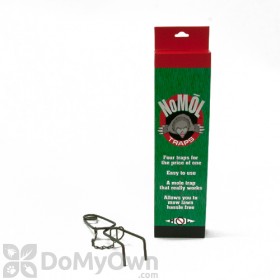
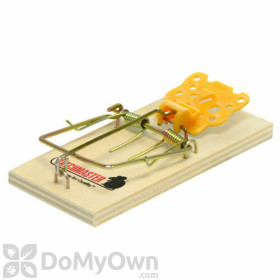
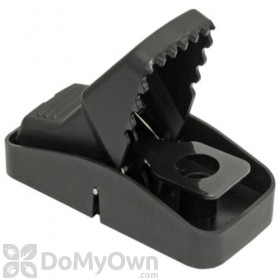
When voles are not numerous or when the population is concentrated in a small area, trapping may be effective. Use a sufficient number of traps to control the population: for a small garden a dozen traps is probably the minimum number required, and for larger areas at least 50 or more may be needed. A simple, wooden mouse trap baited with a peanut butter-oatmeal mixture or apple slices is commonly used. Often, no bait is needed because voles will trigger the trap as they pass over it.
Trap placement is crucial. Voles seldom stray from their runways, so set traps along these routes. Look for burrows and runways in grass or mulch in or near the garden. Place baited traps at right angles to the runways with the trigger end in the runway. Examine traps daily and remove dead voles or reset sprung traps as needed. Continue to trap in one location until no further voles are caught, then move the trap to a new location 15 to 20 feet away. Destroy old runways or burrows to deter immigration of new voles to the site.
Bury dead voles or place them in plastic bags in the trash. Because voles may carry infectious pathogens or parasites, do not handle them without rubber gloves; you can use a plastic bag slipped over your hand and arm as a glove. Once the vole is removed from the trap, hold it with your "bagged" hand and turn the bag inside out while slipping it off your arm and hand. Be sure to keep small children and pets out of the area where you have set traps.
Baiting
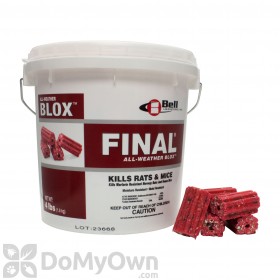
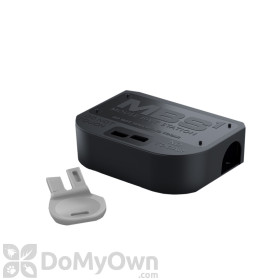
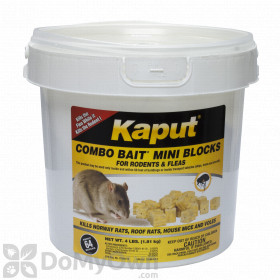
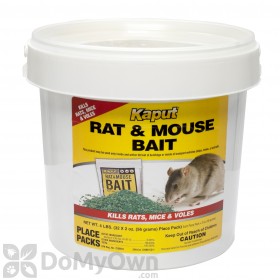
When voles are numerous or when damage occurs over large areas, toxic baits may be the quickest and most practical means of control. Take necessary measures to ensure the safety of children, pets, and nontarget animals; follow all product label instructions carefully.
Anticoagulants, often referred to as multiple-feeding baits, interfere with an animal's blood-clotting mechanisms, eventually leading to death. They are probably the safest type of rodent bait for use around homes and gardens because they are slow acting, must be consumed over a period of 5 or more days to be effective, and there is an effective antidote, vitamin K1. Anticoagulant baits are available at many county agriculture commissioners' offices as well as at retail stores.
Some anticoagulants such as brodifacoum and bromadiolone cannot be used for voles because of the potential risk they pose to predators such as cats and dogs; check the label carefully to ensure that the bait has voles or meadow mice listed.
Because the pest must feed on anticoagulant baits over a period of 5 days, the bait must be available until the vole population is controlled. Usually baiting every other day for three applications is effective. As with trapping, bait placement is very important. Place the recommended amount of bait in runways or next to burrows so voles will find it during their normal travels. Generally, spot treating (placing bait in a specific place, such as a runway) is the preferred method of baiting, but if there is a heavy ground cover or if the area to be treated is quite large, broadcasting might be a better option if the label allows it. When broadcasting bait, be sure to spread it evenly over the infested area. If you use this technique, you will probably have to broadcast every other day for a total of three or four applications.
Repellents
Commercial repellents are available for protecting plants from voles but their effectiveness is questionable and their use is often not practical. They must be applied before damage occurs. Voles usually damage plants at or just beneath the soil surface, making adequate coverage difficult or impossible. Do not apply repellents to food crops unless such use is specified on the product label.
Biological Control
Many predators, including coyotes, foxes, badgers, weasels, cats, gulls, and especially hawks and owls, eat voles. However, in most cases predators cannot keep vole populations below damaging levels. Many predators simply do not hunt close to homes and gardens where control is needed. Most predators have a broad-based diet and readily shift to alternative prey when the number of voles declines. Predators rarely, if ever, take every last vole; thus, a residual population remains. With their extremely high reproductive potential, any remaining voles could repopulate an area in a short period. With this potential for severe damage, a homeowner or gardener cannot afford to wait for a predator to appear, but must take immediate action to prevent the loss of valuable plantings. Effective, immediate action usually involves baiting or trapping and habitat modification.
As with all animals, natural constraints limit vole numbers. Because populations will not increase indefinitely, one alternative is to do nothing and let nature limit the voles. Experience has shown, however, that around homes and gardens the natural population peak is too high and damage will be above tolerable limits.
Other Control Methods
Burrow fumigants are not effective for the control of voles because the vole's burrow system is shallow and has numerous open holes. Electromagnetic or ultrasonic devices and flooding are also ineffective against voles.
Authors: T. P. Salmon, Wildlife, Fish, and Conservation Biology, UC Davis; and W. P. Gorenzel, Wildlife, Fish, and Conservation Biology, UC Davis
Editor: B. Ohlendorf
Technical Editor: M. L. Flint
Produced by IPM Education and Publications, University of California Statewide IPM Program
|